By Carolyn Konheim
Partner, Ketcham and Konheim
BROOKLYN — Almost everything has been thought of to make congestion pricing work — except answers to practical problems raised by legislators in Albany and the City Council.
Ironically, the best way to solve them is to increase the proposed $8 congestion pricing fee to enter Manhattan Central Business District, the CBD, to $10.
The brilliant responses by NYCDOT Commissioner Janette Sadik-Khan to Monday’s grilling by the NYC City Council revealed, that in spite of the thoroughness of the City’s preparation to make congestion pricing work, there are real world concerns that must be addressed, lest we squander the best chance to accomplish undeniable goals: to reduce traffic and increase transit funding,
The primary unanswered questions are:
• What incentive is there for any driver now paying $8 at MTA or Port Authority crossings to change their travel patterns in any way?
• Why aren’t New Jersey drivers being charged something more for CBD entry?
• If there’s no reduction of trips by existing toll payers, how can you rely on Brooklyn and Queens drivers using free bridges to achieve your goals?
• Why would an $8 fee motivate a driver from areas without subways to give up driving for a $10 express trip to and from the CBD?”
• What are commuters from southeast Queens to do, when there are no reasonable transit equivalents for automotive travel times?
• Do you expect cancer patients to take transit to get medical treatments?
• How can you justify only a $1 surcharge on taxi and black car CBD trips by customers whose incomes are twice that of the motorist?
• How can we be sure that residential parking permits don’t spread park and ride burdens to adjacent communities?
• How can you leave out more effective traffic enforcement?
The answers are:
• $10 is the new two-way toll on MTA facilities without E-ZPass discounts.
• A $10 CBD entry fee would achieve price parity on all entries
• It would increase revenues by about $250 million a year over the $8 fee.
• $75 million of the added fee would be paid by west-of-Hudson entries.
• $50 million of that could subsidize 5,000 low income workers a day who have to drive and vouchers for 15,000 medically necessary auto trips/day.
• $100 million could bring fares on express buses and in-city commuter rail stations down to $6 two-way City-Ticket fares 24/7 for in-city commuter line stations and on all express buses, attracting people out of cars onto transit. This would also relieve crowding on the E and F in Queens, on the 4, 5 6 in Manhattan by giving Bronx riders a faster alternative and by freeing capacity on the A train in Brooklyn.
• $100 million a year could restore in-city commuter stations and rebuild the LIRR through Queens to the CBD, also providing a one-seat ride to JFK.
• A $10 fee would also cut travel by 10 percent in the CBD and by 3 percent in the rest of NYC.
• The reduced traffic would reduce the hidden but real $40 cost per 20-mile round trip to and from the CBD that drivers impose on everyone else.
The Mayor’s $8 fee is an artifact. It was the value of 5 English pounds in 2001 when London began planning congestion pricing. It was the toll paid on MTA facilities; today, the MTA base cash toll is $10. By 2009, the 2001 value of $8 will be $10. To set it at less undercuts the fee or necessitates a repeat of the current ordeal.
The council noted other shortcomings of the governor’s bill that need fixing:
• A $1 surcharge on taxi trips will get lost in the existing rush hour and night time surcharges, but Assemblyman Brodsky’s $4 add-on is overkill. What is important is to direct the Taxi & Limousine Commission to develop a London-like plan of consumer-oriented steps to reduce wasteful taxi cruising. These include group riding from numerous taxi stands and electronic hailing with cell phones and genuine GPS systems like “black cars” use. Taxi pick-ups should be restricted to left side of the avenue only to reduce the diagonal darts to street hails that cause domino-like back-ups and to keep taxis out of bus lanes.
• The proposed $1 surcharge on “black cars’” typical $40 fares is laughable.
This is where Mr. Brodsky’s $4 should apply as a start to a larger plan to curtail their flagrant violation of parking rules.
• The Council’s passion for enforcing the “don’t block the box” rules is well deserved, and the Brodsky provisions should be integrated into the governor’s bill.
• The bill seeks to protect communities from becoming park and ride areas for commuters avoiding the fee by permitting residential parking permits for 50 percent of the spaces and directing incremental parking revenues into a Livable Streets fund.
These promising goals are best stated as an authorization of permits and a requirement that the City develop a comprehensive citywide parking program.
However, the bill should be specific for the CBD, where the City should price all on-street spaces, not just increase existing meter fees, in order that
• Free parking doesn’t undermine the congestion pricing fee;
• Pricing deters internal auto use;
• Pricing eliminates vehicle circulation for free parking;
• Pricing facilitates deliveries;
• Pricing offsets effects of eliminating exemption of tax on off-street parking; and
• Pricing generates revenues equal to CBD entry fees paid by other boroughs.
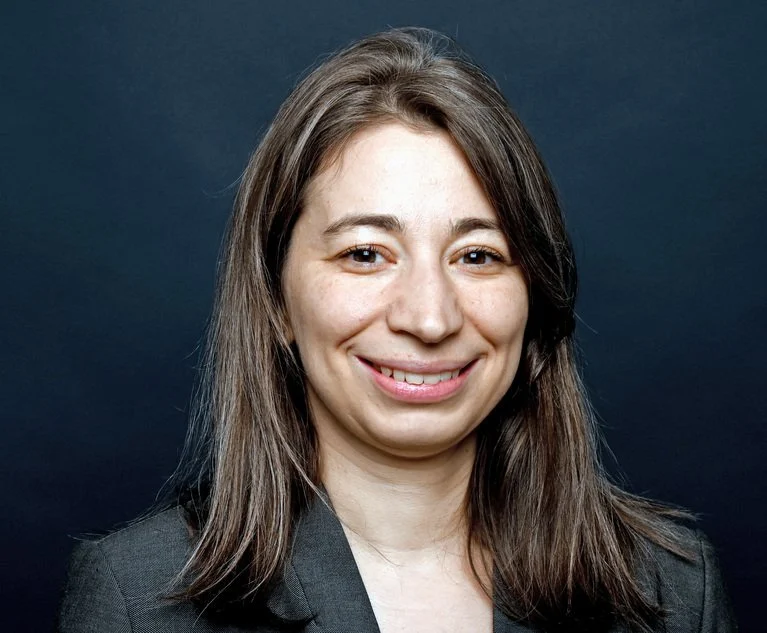
Carolyn Konheim is a partner in the traffic engineering and consulting firm of Ketcham and Konhiem in Cobble Hill.
© Brooklyn Daily Eagle 2008
All materials posted on BrooklynEagle.com are protected by United States copyright law.
Just a reminder, though -- It’s not considered polite to paste the entire story on your blog. Most blogs post a summary or the first paragraph,( 40 words) then post a link to the rest of the story. That helps increase click-throughs for everyone, and minimizes copyright issues.
So please keep posting, but not the entire article. arturc at att.net
Main Office 718 422 7400