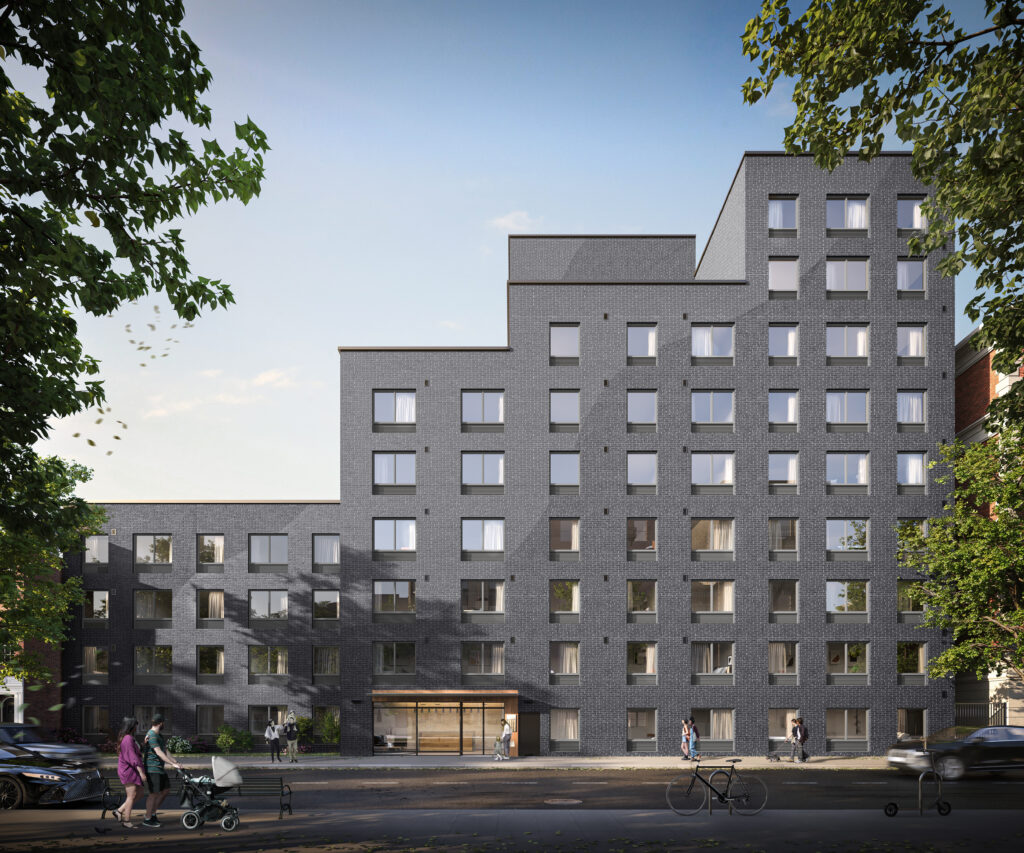
The latest perversity is the concerted opposition to an expansion of Brooklyn Friends School into Boerum Hill. Just as the saying goes that no good deed goes unpunished, so no good project for Brooklyn goes unopposed. (One can only imagine the agitated uproar if Jesus were to come back to earth in Brooklyn.) As with every other project, the opponents have seized on the always handy objection: “traffic.” There is not a project that can be built in Brooklyn that won’t bring some added traffic. Traffic is Brooklyn’s Afghanistan – a problem to which no good solution is readily apparent. Curiously, one of the ways to deal with traffic is to let it build up so that the increasing inconvenience forces at least a portion of drivers to find either other routes or other means of getting to their destinations. A build-up of traffic is, for instance, a factor in the growing use of bicycles.
In the case of the proposed Friends School annex on State Street, it is projected that something under 50 cars would arrive there on school days, about a one-third increase for traffic on the block, on a street that is admittedly narrow and ill-suited to through traffic. During the morning hours when some pupils would be brought to this elementary school, other traffic customarily using that route would begin to find other routes, and some of it would simply go away. The increase for State Street would be less than the alarmists predict. There is a paradoxical quality about traffic, with history having shown that every new traffic artery only brings an increase in traffic, while the elimination of one often reduces the total volume. The famous example of this occurred back when highway czar Robert Moses wanted to widen the roadway through Washington Square Park in Manhattan, and Jane Jacobs led a successful campaign to simply close the roadway altogether. The predicted swamping of nearby local streets by traffic never happened.
But of course traffic is only a conveniently “neutral” argument that masks more deeply felt prejudices against a school in that residential neighborhood. Kids can be noisy – disruptive of the ordered lives that adults try with varied success to arrange for themselves. Some of the local residents imagine a degree of disruption that doesn’t allow for the fact that children of elementary school age are not going to be in any serious way disorderly. Furthermore, they’ll be there only during daytime hours, almost all of that time inside the school, while a large part of the adult population is at any case away at work. There won’t be nighttime disturbance.
Beyond the exaggerated fears of traffic and of kids there is the general unease we’ve seen in Brooklyn during the past couple of decades over any project that brings outsiders into our midst. The gentrifiers who rehabilitated so many rows of brownstones and brick houses have to a large extent become a force against further change. We’ve seen it in those who opposed earlier plans for Brooklyn Bridge Park because the park would be a magnet for “undesirables” and those who now, more respectably, oppose the current plan over “privatization” because economic realities (including the almost universal opposition to any new taxes) have led to the inclusion of some condominium housing as the only dependable means of paying for the park’s upkeep. Visitors on recent tours of the partly developing park have been struck by how large the park really will be and how little of it will be taken up by the condominiums.
With Atlantic Yards, too, the unease about outsiders coming in has clothed itself in a variety of more respectable arguments, including traffic (never mind that the site is uniquely well served by public transit), eminent domain (which affects a small handful of people for a 22-acre project), impact of scale on brownstone neighborhoods (which in fact don’t abut the site), and financing arrangements (as if the developer hadn’t incurred considerable risk). That’s not to say there isn’t reason for concern about what the as yet unrevealed, Gehry-less major part of the project will look like. Nonetheless, it’s almost as if the better and more responsible the project the more extreme the opposition, while a scattershot of discrete projects escapes public scrutiny. Towers like the Oro, Toren, Beacon Tower and J-Condo, some architecturally better than others, have sprung up at sites whose suitability in terms of traffic and appropriateness to their surroundings is most questionable. What seems to have happened is that an insular, defensive atmosphere concentrated especially in the brownstone neighborhoods has bred a suspicion of all that might be in the best interests of Brooklyn, and ultimately in the best interests of us all.
Too many Brooklynites are at war with their own better angels.
— Henrik Krogius, Consulting Editor
Brooklyn Heights Press & Cobble Hill News
Questions? Comments?
Sound off to the Editor
————————
© Brooklyn Daily Eagle 2009
All materials posted on BrooklynEagle.com are protected by United States copyright law.
Just a reminder, though -- It’s not considered polite to paste the entire story on your blog. Most blogs post a summary or the first paragraph,( 40 words) then post a link to the rest of the story. That helps increase click-throughs for everyone, and minimizes copyright issues. So please keep posting, but not the entire article. arturc at att.net