BROOKLYN — On October 9, 1979 Prospect-Lefferts Gardens was named an historic district. Leffert Pietersen van Haughwout emigrated from Holland to America in 1660 and settled at the northern edge of Flatbush in Brooklyn. His farm remained in the family for generations, but by the 1890s it became clear to James Lefferts, the great-great-great grandson of the family’s progenitor, that urban development would soon engulf his ancestral farm. He lived in the old Lefferts Homestead, built in 1777-83 and located on Flatbush Avenue between Maple and Midwood Streets (after his death in 1918, it was moved to Prospect Park and is now a museum). It was from the building that James Lefferts supervised the subdivision of his farm into 600 building lots. His project, Lefferts Manor, encompasses eight of the blocks within the historic district.
In order to assure the success of his endeavor, James Lefferts instituted a series of restrictive covenants for each lot that clearly defined what type of building would be allowed. These covenants not only excluded noxious uses such as pigpens, glue factories, and breweries, but also mandated that every house cost at least $5,000 (a substantial sum at the time), be built of brick or stone (a rule that was not always followed), be at least two stories high, and sit at least fourteen feet from the street. Most important, each dwelling was to house only one family. This was a significant restriction since many of the row houses erected in Brooklyn during the 1890s were designed for two families. By restricting the area to houses that were substantial but not excessively grand or expensive, Lefferts hoped to attract a stable middle-class population to his new community.
Major construction in the Manor began in 1897; within two years 160 houses had been erected. James Lefferts did not actually undertake this development. Rather, he sold plots to builders who were responsible for the construction of the new homes. Most of the early houses, such as the rows on Rutland Road and Midwood Street between Flatbush and Bedford Avenues and on Midwood Street between Bedford and Rogers Avenues, are somewhat eclectic. They combine the Romanesque Revival forms popular during the last decade of the 19th century, such as richly textured dark-toned brick and stone, with newly popular Renaissance ornamental details such as garlands and wreaths.
A major boom occurred in the historic district between 1905 and 1911 when over 500 houses were erected. The long, white, limestone rows, for this period, reflect a new desire among Americans to live in imposing Renaissance-inspired cities. The most interesting of the Neo-Renaissance rows in the historic district were designed by talented Brooklyn architect Axel Hedman. Hedman’s most unusual houses are the two-story, limestone rows with red Spanish tile roofs that line both sides of Maple Street, just east of Bedford Avenue.
Corresponding with development in Lefferts Manor was the beginning of construction in the surrounding area. Because these blocks did not have restrictive covenants, new construction included a mix of one and two-family houses. It was during the first years of the 20th century that most of the historic district’s two-family row houses were erected. Long rows of two-family houses line Lefferts Avenue between Bedford and Rogers avenues and Sterling Street between Flatbush and Bedford avenues. Because these buildings have only one front door on the street, it is impossible to tell from the outside that they contain two households.
In 1910 so much development had occurred in the Lefferts Manor section that the book “Flatbush Past and Present” concluded that the area was “a high-grade city improvement” and gives to a prospective buyer “the highest type of city residence.” Nonetheless, there were still several large open tracts within the Lefferts Manor development. In the decade between 1915 and 1925, 85 new homes appeared. Almost all of these were red brick row houses in the Colonial Revival and various medieval inspired styles. Many of them are the work of Slee & Bryson, the architects responsible for the rows in the Albemarle-Kenmore Historic District, and they remain among the most charming row houses in Brooklyn .
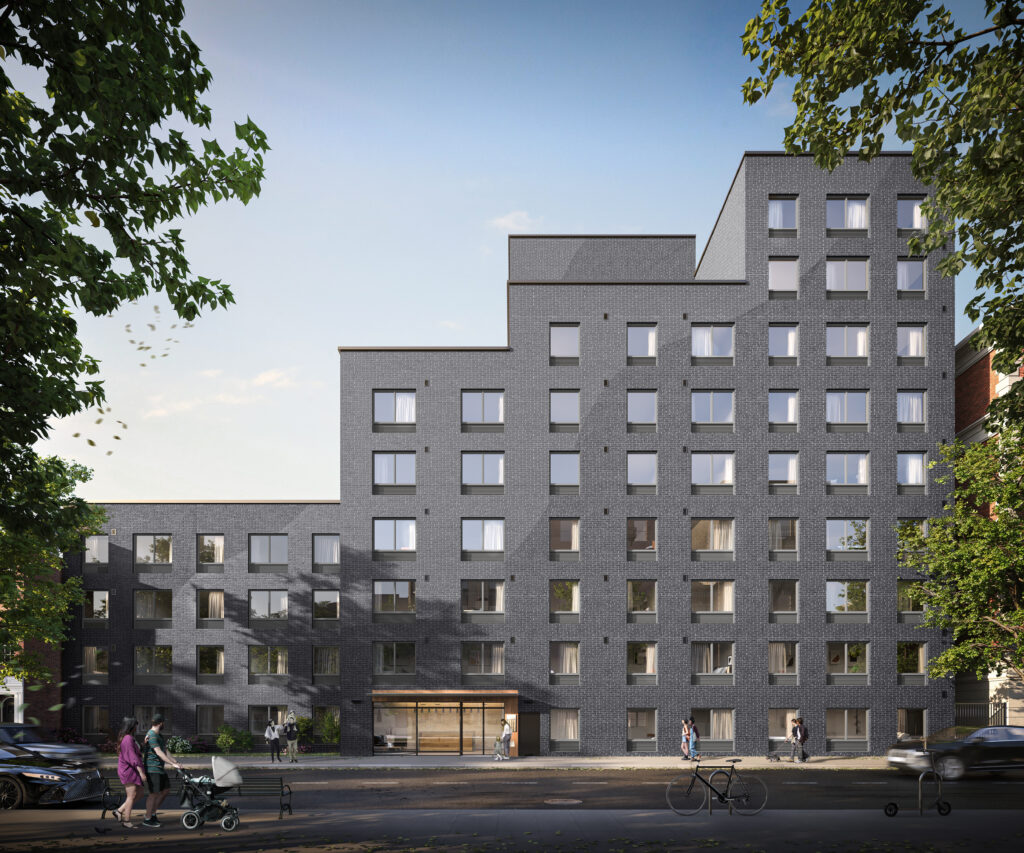
Prospect-Lefferts Gardens has always been a well-maintained, middle-class community, and it remains so today. The Lefferts Manor houses are still single-family residences, and the community continues to attract families seeking a quiet and beautiful neighborhood that is convenient to many of Brooklyn’s finest urban amenities.
————————
© Brooklyn Daily Eagle 2008
All materials posted on BrooklynEagle.com are protected by United States copyright law.
Just a reminder, though -- It’s not considered polite to paste the entire story on your blog. Most blogs post a summary or the first paragraph,( 40 words) then post a link to the rest of the story. That helps increase click-throughs for everyone, and minimizes copyright issues. So please keep posting, but not the entire article. arturc at att.net