Rents on Brooklyn’s Montague, Fulton
Similar to Boston, Chicago Main Drags
By Sarah Ryley
Brooklyn Daily Eagle
CITY HALL — San Francisco has tough laws that all but ban national chains in most neighborhoods, while Portland, Maine allows exactly 23 “formula businesses” in its Downtown core. Those cities are among the two dozen that have enacted laws to protect local retailers from the proliferation of chain and big box stores that has seemingly swept across the nation.
In contrast, commercial rent control for stores smaller than 10,000 square feet was defeated by New York’s City Council in 1988, and little has been done since to stave off what many see as the near extinction of “mom and pop” businesses here. As the City Council, led in part by Brooklyn Councilman David Yassky, mulls over legislation that would help the neighborhood florist or coffee shop survive in this increasingly expensive city, groups like the Municipal Art Society have been examining laws elsewhere that could be enacted here.
According to a New York City Council report on the matter, 186,000 mom and pop businesses operate in the city, and if in keeping with the national average, account for 75 percent of all new jobs. Rising rents, property taxes and development pressures, particularly in Downtown Brooklyn, were listed as the chief reasons why locally owned businesses close down.
In San Francisco, residents of neighborhoods eyed by a chain have the option of calling a public hearing on the matter, and some have banned chains completely. Chains that are allowed to locate there, like Starbucks, often are prohibited from operating or designing that store like any other in the country. Three other cities have laws specifically against “formula businesses,” according to information compiled by Vicki Weiner, director of planning and preservation at the Pratt Center for Community Development.
Other cities have enacted laws tailored for Wal-Mart, the largest “big box” chain in the world, which is often criticized for paying many of its employees low wages and forcing many to rely on government assistance such as health care and food stamps. Two cities require large stores — which would also include IKEA and Target if enacted here — to undergo an impact analysis and assure that they provide certain benefits before being approved. Nine other cities, including Palm Beach and San Francisco, have enacted caps on store size.
Landmark Laws Protect
Store Size in Heights, Slope
Landmarked neighborhoods, like Brooklyn Heights and Park Slope, inherently have limits to store size because the exteriors cannot be altered, essentially achieving the same goal. John Shapiro, a consultant with Phillips Preiss Shapiro Associates Inc., who has worked on Atlantic Avenue and Fulton Mall retail strategies, pointed out that in Chinatown, “where virtually everything you see is illegal,” the facades could also be protected with landmark status, but it would kill the vibe.
Of course, in New York City, the most diverse place in the country, different neighborhoods want different things. While residents of Brooklyn Heights may lament the explosions of banks and drugstores at the expense of quaint neighborhood institutions, Brownsville residents, underserved by banks, may welcome one, along with a few nice chain restaurants and a Duane Reade.
Shapiro suggested that the city enact a number of laws similar to those in other cities, creating a “zoning toolbox,” then chose which to apply on a neighborhood-by-neighborhood basis. Currently, initiatives regulating a certain retail mix are thought up on a project-by-project basis, as was the case with Grand Central Station, or are left up to the onus of the developer.
Compounding the problem, Shapiro said each American generates 25 square feet of retail, which means the city would have to make room for an additional 25 million square feet of retail to accommodate the 1 million new residents expected to move here within the next two decades. Aside from creating new mixed-use and commercial corridors, he said new retail, because of space constraints, “has to go into malls, and new development relies on a retailer to show they can sustain long-term leases” to get financing for a project. That often means chains.
Sometimes, developers are willing to take a risk, or even see local retailers as an asset to their projects, as was the case with William Jackson Ewing, Inc. when planning “Chrystie Place,” anchored by a Whole Foods, on the Lower East Side. The remaining retail space, much of it on converted alleyways is set aside for local entrepreneurs just getting their start.
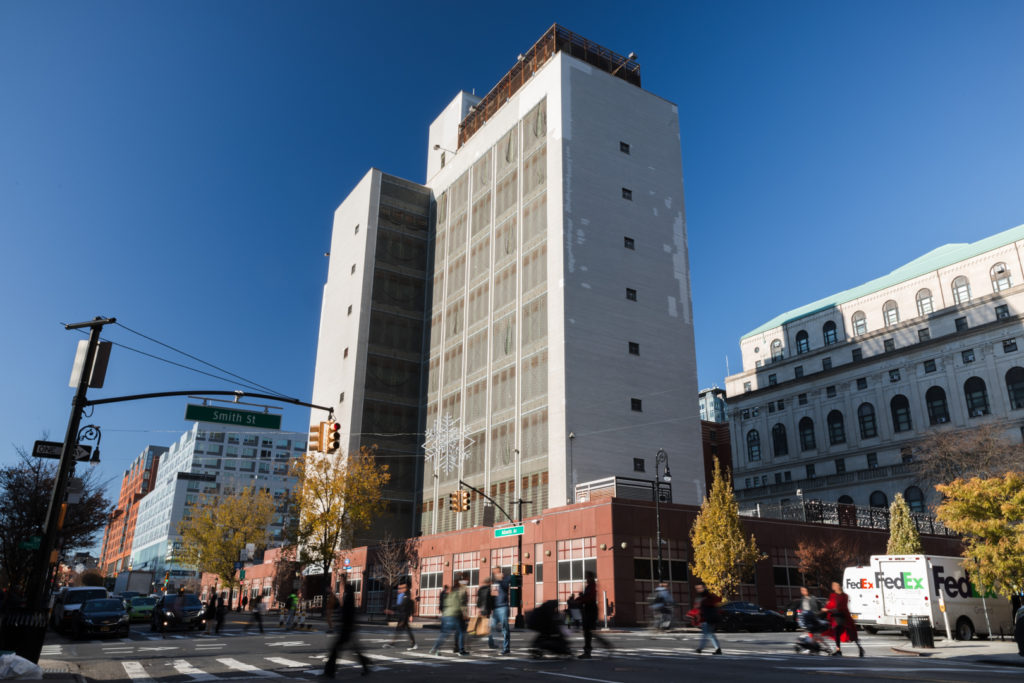
But rents and raising property taxes are the main factors at work in this city’s booming economy. Manhattan’s Fifth Avenue is the second most expensive retail strip in the world, and Montague and Fulton streets here in Brooklyn command rents similar to Boston and Chicago’s main drags, said Michael Berne, a retail consultant and president of MJB Consulting.
“It’s a market on steroids,” he said, adding that it’s worth it for retailers, because the city’s density and foot traffic means they can make more money here than anywhere else.
© Brooklyn Daily Eagle 2007
All materials posted on BrooklynEagle.com are protected by United States copyright law.
Just a reminder, though -- It’s not considered polite to paste the entire story on your blog. Most blogs post a summary or the first paragraph,( 40 words) then post a link to the rest of the story. That helps increase click-throughs for everyone, and minimizes copyright issues.
So please keep posting, but not the entire article. arturc at att.net
Main Office 718 422 7400