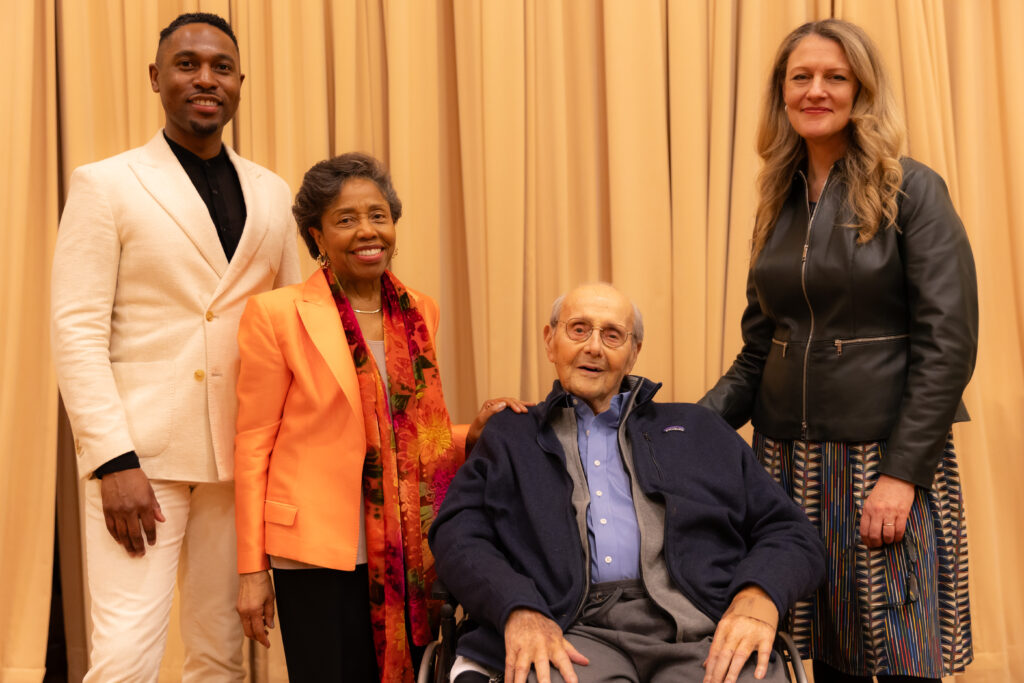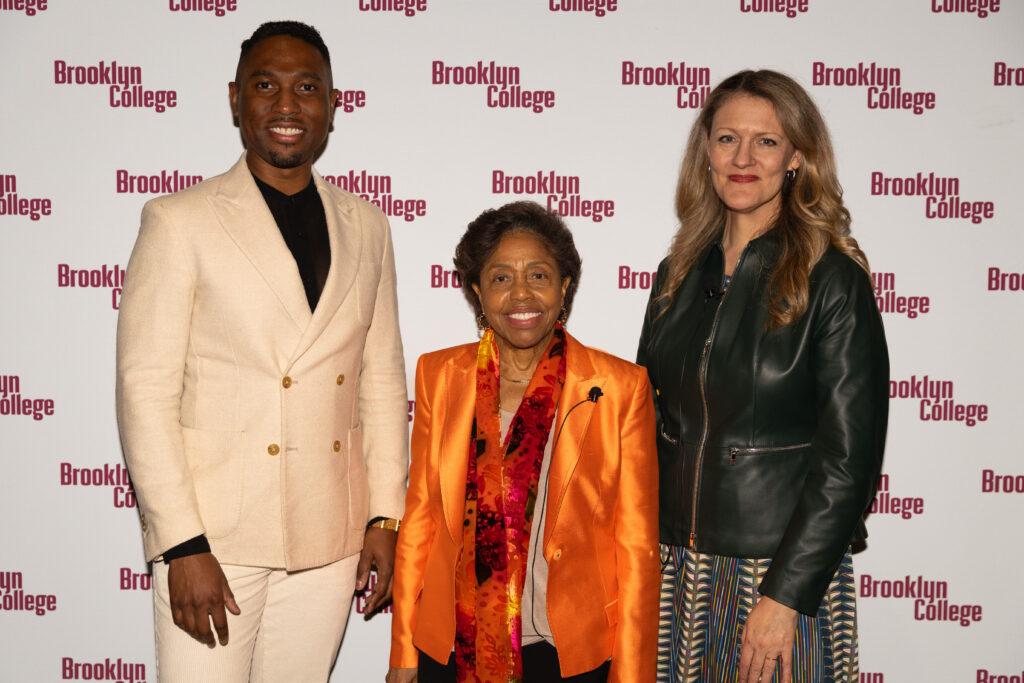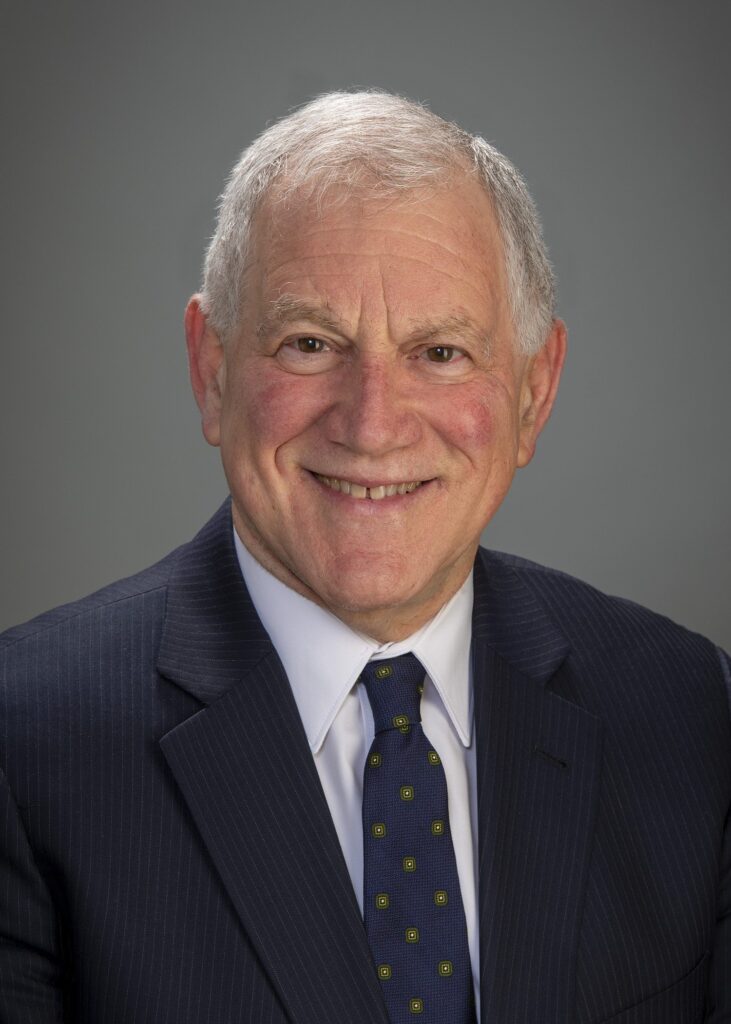
Author D’Antonio, Peter O’Malley
Speak at Brooklyn Historical Society
By Matthew Goldberg
Brooklyn Daily Eagle
BROOKLYN HEIGHTS — A mildly contentious yet spirited air filled the Brooklyn Historical Society this past Saturday afternoon as Brooklyn’s own beloved Dodgers were the topic of discussion. The occasion was the unveiling of a new book about Walter O’Malley and the controversial move of his team from the borough to sunny southern California just over 50 years ago.
Michael D’Antonio presented his latest offering, Forever Blue: The True Story of Walter O’Malley, Baseball’s Most Controversial Owner, and the Dodgers of Brooklyn and Los Angeles, in a panel discussion alongside Peter O’Malley, Walter’s son, who would go on to retain ownership of the team.
Deborah Schwartz, president of the Brooklyn Historical Society (BHS), introduced the speakers to the standing-room-only crowd as staff scurried to get more chairs. Richard Sandomir, sportswriter for The New York Times, served as moderator.
D’Antonio, born in New Hampshire, grew up a Red Sox fan attending games at the age-old (and still standing) Fenway Park. An “empathetic and industrious outsider” to New York sports, he told the Eagle, he views baseball as “a window into our national story.”
During the talk on Saturday, D’Antonio conceded, “I’m really not a baseball guy; I love baseball ... but I’m really a history guy.”
Walter O’Malley was “a figure that prompted emotion,” he said, asking, “How could a sportsman be so hated in one place and so beloved in another?” He is “still the subject of so much controversy and discussion,” 30 years after his death, he said.
Peter O’Malley, former president and owner of the Los Angeles Dodgers from his father’s death in 1979 until 1998, had flown back to his native Brooklyn just for the afternoon.
Asked if he was surprised by any of the content of D’Antonio’s exposé, O’Malley replied, “Short answer: No. But it forced us to go back through the archives.”
One item Peter highlighted from the archives was a letter by Walter from 1946, addressing the disrepair Ebbets Field had started to show from its once ornate beginnings.
The Dodgers – in Flushing?
As the elder O’Malley fought and fought with city Parks Commissioner Robert Moses, by then “the most powerful unelected man in the history of New York,” over where to build the stadium, Moses “had long before decided a ballpark would go in Flushing Meadows, Queens,” D’Antonio told the Eagle.
“The whole idea of it being the Brooklyn Dodgers was really important to O’Malley,” said D’Antonio. “He liked that whole identity of the team.”
And, O’Malley decided, “if they could be the Queens Dodgers, they might as well be the L.A. Dodgers,” he said.
“History clearly shows O’Malley wanted help assembling land that he would buy and where he would build a privately funded ballpark,” D’Antonio told the Eagle. “Moses blocked him for 10 years, and even told his staff to make it look like a sincere effort even though he never intended to help.”
The simple fact was that Moses, who held a half-dozen government posts simultaneously, “overpowered” O’Malley, said D’Antonio. “O’Malley was a pipsqueak” compared to Moses in terms of actual power, he said.
Moses would go on to get his venue in Queens — Shea Stadium — for what would become the home of the newly established New York Mets in 1962, the same year Dodger Stadium opened in Los Angeles.
The Proudest Day
Asked by the Eagle what his father’s proudest moment was with the Dodgers, without flinching, Peter named opening day at Dodger Stadium on April 10, 1962.
“It was the proudest day of his life.” the younger O’Malley said. “He was frustrated that he couldn’t make it happen here,” but he saw that it could happen in L.A.
Brooklyn’s natural duality of character — simultaneously contentious yet respectful — was evident when the floor was opened up to the audience for questions. Questioners were asked to keep things civil with this very delicate subject matter.
One devoted Brooklynite, “Norton,” gave O’Malley a rather hard-hitting question about whether the elder O’Malley had pitted one city against the other, all the while favoring Los Angeles.
“I think [Walter] just reached the point where he realized he [couldn’t keep the team] in Brooklyn,” Peter gracefully replied.
This dual nature also admittedly became the inspiration for the title of D’Antonio’s book — something, he said, which Peter might not have appreciated. Obviously in reference to “Dodger blue,” the shade of color which epitomizes the team, he also noted how Brooklynites will be forever “blue” (sad) that the team left them for sunnier pastures.
Readers of this paper will be thrilled to know that the Brooklyn Daily Eagle makes frequent appearances in the book — right at the start, from page 1. The Eagle, “[o]nce the biggest afternoon paper in the country,” writes D’Antonio, had been a loyal follower of the Dodgers in the decades up until the paper’s initial hiatus in 1955.
Forever Blue, by Michael D’Antonio, is published by Penguin Group (USA) Inc., under the Riverhead Books imprint. A delightful read, with a very tastefully done dust jacket, it clocks in at 355 pages and retails for $25.95.
Questions? Comments?
Sound off to the Editor
RELATED STORIES:
Book Defending O’Malley To Be Launched at Brooklyn Historical Society
The Trolleys We Didn’t Dodge
————————
© Brooklyn Daily Eagle 2009
All materials posted on BrooklynEagle.com are protected by United States copyright law.
Just a reminder, though -- It’s not considered polite to paste the entire story on your blog. Most blogs post a summary or the first paragraph,( 40 words) then post a link to the rest of the story. That helps increase click-throughs for everyone, and minimizes copyright issues. So please keep posting, but not the entire article. arturc at att.net