By Phoebe Neidl
Brooklyn Daily Eagle
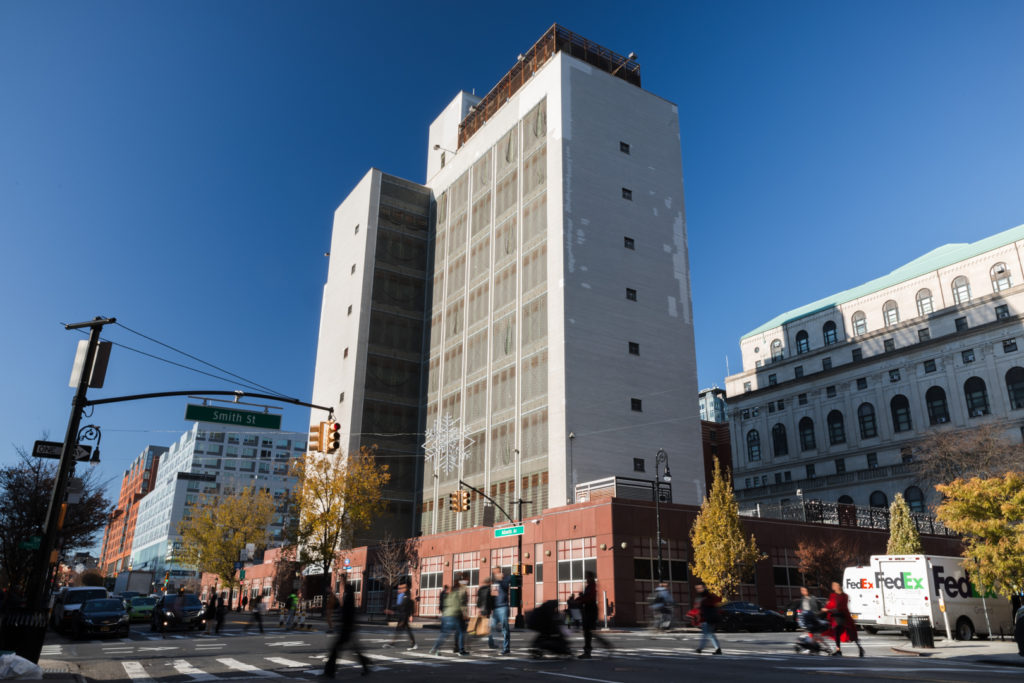
BROOKLYN — The U.S. Environmental Protection Agency (EPA) Wednesday nominated the Gowanus Canal as a federal Superfund site, it was announced by Congresswomen Nydia M. Velázquez and Yvette Clarke.
The federal program could bring vital new funding to the clean up of the polluted, 1.8-mile waterway, but some are wondering how the designation could effect public use of the canal and other state and local plans for cleanup.
The Superfund program is the federal government’s principal program to clean up the nation’s hazardous waste sites. Now that the Gowanus Canal has been nominated for Superfund status, a 60-day public comment period is initiated. Following that, a final decision will be made as to whether the site is eligible to be placed on the National Priorities List (NPL). The NPL is used by EPA to steer resources to sites for clean-up assistance.
“We’re waiting to hear clarity on what it means,” said Owen Foote of the Gowanus Dredgers Canoe Club, a volunteer organization dedicated to revitalizing waterfront access. “If there’s a crew coming out next week or in June, this is fabulous news...but it may be another decade. I don’t know how much time passes between designation and actual clean up.
“Our concern would be suspension of programming,” Foote said. “I’m not sure if people are allowed on a Superfund site.”
The Gowanus Dredgers hosts canoe rides and other community activities on the canal three to four times a month, May through October. This season will kick off with an Earth Day celebration on April 24.
“The whole purpose of our program is to expose people to it so that we can generate a constituency to clean it upBut we look forward to strong government investment in the waterway,” added Foote.
“I don’t think that at this point there’s any reason to suggest that [access would be restricted],” said Gail O’ Connor, spokeswoman for Congresswoman Nydia Velazquez.
“The designation would allow the federal government to provide funding for cleanup. It’s not about restricting access.”
The Gowanus Canal Conservancy also had concerns about a Superfund designation. In a statement, the conservancy said, “There is no question that the Gowanus Canal is a historically polluted waterway, the remediation of which has been a prime objective of the Gowanus Canal Conservancy… The question is whether placing it on the Superfund list is the best method for achieving the community’s hopes regarding improved environmental quality overall and we hope it is.
“The Gowanus Canal Conservancy is concerned whether the EPA’s proposed Superfund listing will have a chilling effect on currently planned clean-up efforts from local and state environmental agencies. We trust that the EPA’s involvement will not adversely affect plans for the Gowanus Canal Sponge Park. The Sponge Park is the Gowanus Canal Conservancy’s design for a public park and walkway running most of the length of the waterway. This offers to remediate many of the water and run-off issues. We are concerned for the residents and local artists who call the Gowanus neighborhood home and the disruption this could cause to their everyday existence.”
An informational meeting on the Superfund proposal will be held on Tuesday, April 14 at 7 p.m. at the P.S. 32 Auditorium, 317 Hoyt Street (between Union and President Streets). A representative from the EPA as well as the state’s Department of Environmental Conservation will be in attendance.
The Gowanus Canal has been a center of industrial activity since the 186os and at one point was the busiest industrial and commercial canal in the United States.
A flushing propeller that helps mitigate the stench and stagnation of the Gowanus waters was finally repaired in 1999 more than 30 years after it was broken. Recent years have seen local politicians allocating money for the site, which has helped bring about some helpful improvements and momentum for its redevelopment. Also, more and more residential development has been encroaching on the area, making environmental safety increasingly more important.
“The Gowanus Canal can lead the way for a green future in Brooklyn,” Velázquez said. “By eliminating decades-old contamination, we can reinvent the canal to bring new economic development and provide a healthy environment for families who call South Brooklyn home.”
A Brief History of the Gowanus Canal
“Hail the Gowanus Creek...Hold back the hordes of the ruthless invader, let not the minions of tyranny cross...”
No, this unknown 19th century poet does not salute the industrial sludge and infamous stank of Gowanus, but rather he writes of its auspicious role in abetting the escape of American troops in the 1776 Battle of Brooklyn. The hodge-podge rebel army was able to evade a British siege after a conflict at Nicholas Vechte’s Old Stone House by decamping across one of two watery crossings along the Gowanus. From there, Washington was able to escape to Manhattan from the ferry landing and finally on to New Jersey across the Delaware.
The providential creek was named for Native American Canarsee tribe leader, ‘Gowanee.’ (Some accounts read that ‘Gowanee’ was the Canarsee word for leader, and others claim it was a specific leader.) When the Dutch began settling the area in the 1630s they quickly began transforming the marshy area into land suitable for growing produce, and utilized the creek as a method of transporting their goods as well as for creating energy.
The creek was dammed around present day Union Street and First Street in order to power two water mills. Early Dutch accounts make note of the enormous oysters found in Gowanus, often chronicled as “the size of dinner plates.” Pickled in brine and sent down the creek to New York Bay and lower Manhattan, Gowanus Oysters may have been Brooklyn’s first export.
Around the time of the Continental Army’s close brush with defeat, the area was still predominantly farmland and barge traffic along the canal was steadily increasing. Many farmers widened parts of the creek to allow for the passage of their boats. Nicholas Vechte of the Old Stone House actually dredged the creek all the way to his door.
But with the completion of one revolution, dawned the light of another. Brooklyn would be one of the fastest growing cities, in one of the fastest developing economies, in an unprecedented era of global transformation, and Gowanus had its part to play in the industrial transportation complex of the New York Harbor and the Erie Canal.
No one man recognized the industrial potential of the Gowanus more than Edwin Litchfield. Having made a fortune in railroad speculation, Litchfield began buying land off of the farmers on the creek in the 1840s. As his property values increased with the wealth of the city and the investment in its urban environment, Litchfield began to sell his property off into lots at much higher prices than he had paid for it. Neighborhoods developed upland from the creek on both sides, into present day Carroll Gardens and Park Slope. Many of the building materials for the constant construction were shipped throughout Brooklyn on barges on the Gowanus, including much of Brooklyn’s iconic brownstone.
As founder of the Brooklyn Improvement Company, Litchfield began widening and dredging the creek into a canal around 1847, but it was in 1867 that an act of legislature allowed for a full dredging of the canal to commence. Stretching from Gowanus Bay a mile and a half inland to Butler Street, the canal was designed by Major David Douglas of the Army Corp of Engineers. The Gowanus acted as an extended conduit for grain traveling east on the Erie Canal as well as an export highway for various manufacturing sites along the waterway, which included tanneries, stone yards, flour mills, soap-makers and cement works.
Due to poor sanitation planning and just plain ignorance, waste - both human and industrial, began accumulating in the canal. It was most likely the gashouses that were the biggest culprit in degrading air and water quality in the area. Before oil and gas pipelines, coal was shipped on barges and then cooked slowly in gashouses, which released sulfuric waste. Brooklyn Union Gas Co. was the largest in the borough (city) and operated on the west side of the canal near Fifth Street.
For years the community and city leadership sought a way to deal with the stench. Serious thought was given to draining and filling the canal in the early 1890s due to constant outcry and agitation on the part of residents in south Brooklyn. At an 1893 town hall meeting at Grand Union Hall on Court and Harrison Streets, one official declared “we are in the fight to have the canal filledas long as there is a legislature in Albany and a stench in Gowanus.”
In 1911 a flushing tunnel was built to flush the stagnant waters of the inland portion of the canal out into the greater New York Bay.
By World War I, Gowanus Canal was actually the busiest industrial and commercial canal in the United States. Over six million tons of cargo was being transported on the canal annually. But only a few decades later with the building of the Gowanus expressway under the tenure of Robert Moses, trucking took over as the primary means of commercial transport and the canal fell into steady disuse.
In 1961 the flushing propeller broke when it was jammed with a manhole cover and for more than 30 years the waters of Gowanus were utterly foul. Light was unable to penetrate even two feet into the water; a depth of six feet is needed in order to sustain life.
Finally repaired in 1999, recent years have seen local politicians allocating money for the site, which has helped bring about some helpful improvements and momentum for its redevelopment. Several species have returned to the canal waters, including oyster plant seedlings, which were introduced by the Gowanus Dredgers Canoe Club, a volunteer organization that seeks to enhance and increase waterfront activity in New York City.
— Phoebe Neidl