Three-Quarters of 434 Residential Units Will Be Affordable
By Linda Collins
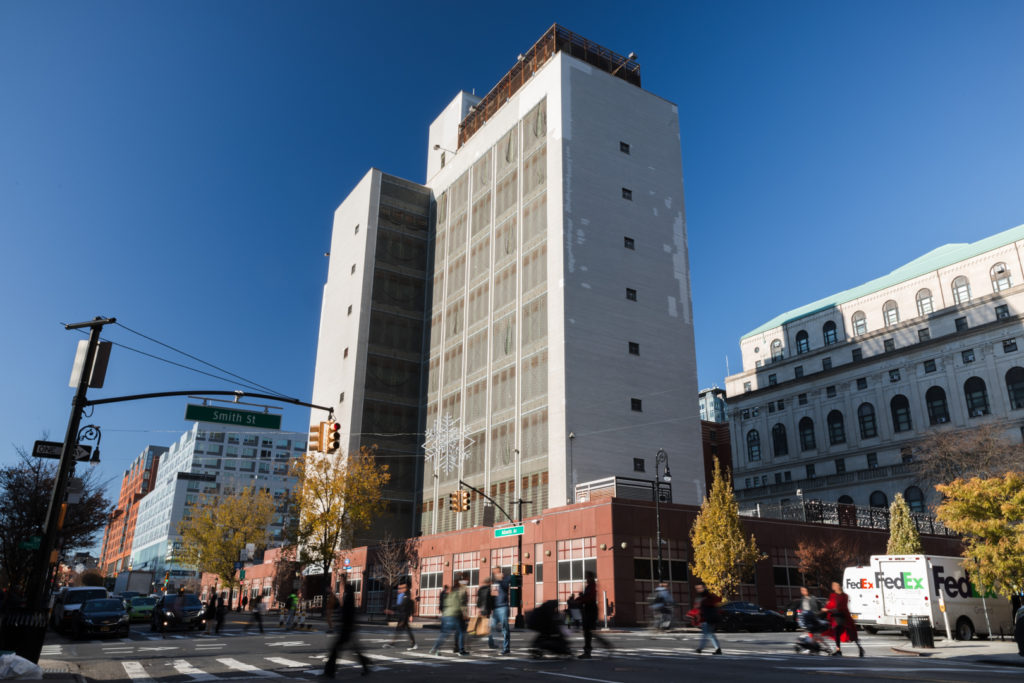
WALLABOUT — The Department of Housing Preservation and Development (HPD) selected a developer for the Navy Brig site at the Brooklyn Navy Yard in Wallabout.
Identified as the Navy Green Joint Venture, the developer is actually a partnership of Dunn Development Corp. and L&M Equity Participants Ltd., according to HPD Commissioner Shaun Donovan
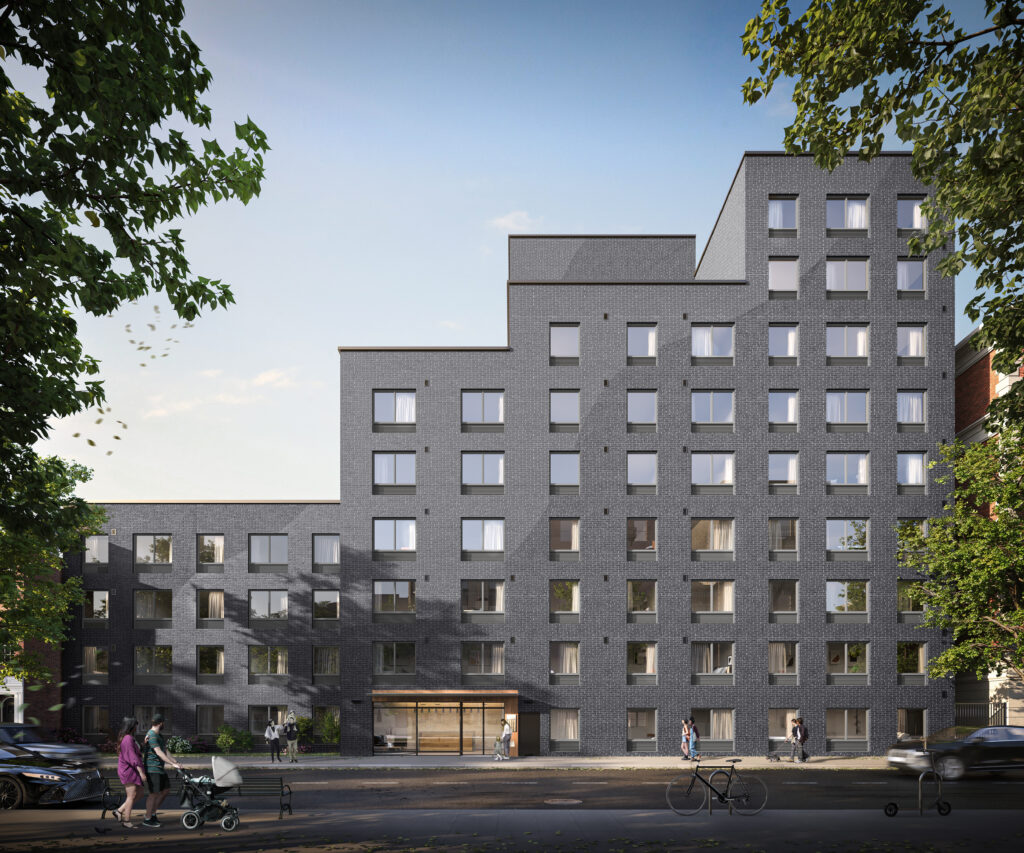
“The redevelopment of this 103,000-square-foot former prison site will create a mixed-use community, consisting of 434 residential units, commercial space, open space and a community facility,” said Donovan. “By combining affordable rental and homeownership units with market-rate co-ops, townhouses and supportive housing, the redevelopment of the Brig will result in an unprecedented mixed-income community.”
To oversee the design of the site’s master plan, its structures and LEED certification, the partnership has selected the architectural team of FXFowle Architects, Curtis + Ginsberg Architects LLP and Architecture in Formation.
The Navy Green team proposed the most comprehensive plan that emphasized design excellence while including the greatest number of affordable units.
According to Donovan, approximately 77 percent of the residential units will be affordable to families earning between 30 percent and 130 percent of the Area Median Income (AMI), which is equivalent to a salary range of $21,250 to $92,170 for a household of four or $14,900 to $64,480 for a single household.
The affordable units will be part of Mayor Bloomberg’s 10-year New Housing Marketplace Plan to build and preserve 165,000 units of affordable housing for 500,000 New Yorkers.
“By developing mixed communities through the mayor’s New Housing Marketplace Plan, the city is preserving the diversity and affordability of our neighborhoods, which is critical to our city’s economic future,” said Donovan. “This development proposal would not have been possible without the insight and support of the Wallabout residents and their elected officials.”
Breakdown of Housing Units
Of the 434 residential units, 203 will be for homeownership, of which 179 will be co-op apartments and 24 will be townhouse units.
Co-op units: 75 percent will be affordable to households earning up to 130 percent of the AMI, which is equivalent to $92,170 for households of four or $64,480 for single households. The remaining co-op units will be sold at market-rate.
Townhouses: 20 percent of the townhouses will be affordable to households earning up to 130 percent of the AMI, which is equivalent to $92,170 for households of four or $64,480 for single households. The remaining townhouse units will be sold at market-rate.
Rentals: 231 units will be rentals ranging in affordability as follows:
• 97 units will be for supportive housing affordable to individuals earning up 60 percent of the AMI, which is equivalent to $29,760.
• 67 units will be affordable to households earning up to 60 percent of the AMI, which is equivalent to $42,540 for households of four or $29,760 for single households.
• 30 units will be affordable to households earning up to 80 percent of the AMI, which is equivalent to $56,700 for households of four or $39,700 for single households.
• The remaining 37 rentals, which will be part of the townhouses, will be market-rate.
The site’s community facility will include a visual arts center and a day care center. It is anticipated that a café, restaurant and/or environmentally-friendly dry cleaner will occupy the site’s commercial space.
Community residents, local business and community-based organization leaders, elected officials and staff from HPD and other city agencies participated in the three-day International Design Workshop in December 2003, which resulted in a set of planning principles, a tentative development program and a conceptual site plan.
Following the workshop, HPD established a 14-member community task force to help refine the site plan and continue the dialogue. The task force met five times and its members approved the Request for Proposals (RFP).
“The task force played a critical role in the selection of the development team,” said Donovan.
Commented Borough President Marty Markowitz, “Thanks to the creativity and hard work of HPD and the community task force, the mixed-use development of the Brig site will be contributing to the vitality of this growing area of Brooklyn. I have been proud to help make the site’s affordable-housing component a reality, which will help preserve the ethnic and economic diversity that makes us strong. When it comes to adding more affordable housing, Brooklyn says, ‘Brig it on!’”
City Council Member Letitia James, (D-Brooklyn), praised the project, saying it “represents an excellent example of high-quality sustainable design, community planning and affordable housing.”
History of Site
The site is bounded by Flushing Avenue to the north, Park Avenue to the south, Clermont Avenue to the east and Vanderbilt Avenue to the west.
The Brig was built in the early 1940s and served as a naval prison. After the closing of the Brooklyn Navy Yard in 1966, the U.S. Immigration and Naturalization Service used the Brig as a detention center until 1984 when, faced with severe overcrowding in its prisons, the city sought ownership for its lower-risk prisoners. It served as a minimum-security prison until it was closed in December 1994. The last occupants were volunteer workers involved in post 9/11 cleanup.
Demolition and site clearance were completed in August 2005, according to Donovan. Construction is anticipated to begin in the late spring or early summer of 2008.
© Brooklyn Daily Eagle 2007
All materials posted on BrooklynEagle.com are protected by United States copyright law.
Just a reminder, though -- It’s not considered polite to paste the entire story on your blog. Most blogs post a summary or the first paragraph,( 40 words) then post a link to the rest of the story. That helps increase click-throughs for everyone, and minimizes copyright issues. So please keep posting, but not the entire article. Arturc@att.net