âGovernors Island Intrinsically Linked to Brooklyn Waterfrontâ
By Linda Collins
Brooklyn Daily Eagle
DOWNTOWN BROOKLYN â Things will get worse before they get better, but there are also a few bright lights in Brooklynâs economic future, according to the speakers at Tuesdayâs Economic Outlook Breakfast, sponsored by the Brooklyn Chamber of Commerce and Sovereign Bank.
Among the bright lights are the successes of manufacturing and industrial businesses at the Brooklyn Navy Yard, which remains 99 percent fully leased, according to Andrew Kimball, president of the Brooklyn Navy Yard Development Corp. (BNYDC) and a panelist Tuesday focusing on the boroughâs future.
âAnd although in the last year we have lost one tenant in 3,000 square feet to the economic crisis, we have five lined up to come in,â he said.
Kimball also noted that there are plans for the development of 1.7 million square feet of new space and the BNYDC will be cutting the ribbon soon on its first green building, with five more planned.
The success of the Navy Yardâs businesses, mostly all small ones, is based on their proximity to the waterfront, to Manhattan and to their end-users and clients, according to Kimball.
Kimball also said they are niche manufacturers run by highly creative entrepreneurs and they support other key areas of the economy, like the cultural sector.
âWorse Before They Get Betterâ
Saying things will get worse before they get better, financial analyst Maria Fiorini Ramirez, a panelist focusing on the national picture, noted that housing, consumer spending and the fallout from the financial system collapse are the major issues for 2009.
More than 70 percent of the economy is driven by consumer spending, she said, and with cutbacks and layoffs, there will be no consumer spending.
âUnfortunately, it took a long time to create the mess weâre in and it will take a long time to clean it up,â Ramirez said, adding that she estimates it will take between 12 and 18 months for a turnaround.
Asked by moderator Greg David of Crainâs New York Business when the financial/securities industry might come back, Ramirez said âIt will take a while.â
A restructuring of the industry itself must be done, its products will have to change for safer ones and the loss of its transparency and damage to its credibility must be reversed, she said. âThe new industry will be a smaller one and a lot leaner. And with a different ownership.â
George Sweeting, deputy director of the NYC Independent Budget Office and the panelist focusing on the city as a whole, also said a turnaround is far off.
The cityâs downturn, which started later than the rest of the countryâs, will be âsharper and will go further.â
The collapse of the financial sector will have a deep impact on the cityâs economy, according to Sweeting.
âIt accounts for 6 percent of private sector employment but 28 percent of wages and salaries,â he said.
âThe city and state got comfortable with the benefits of a highly compensated industry.â
A loss of 243,000 jobs since the peak is anticipated, with 49,000 jobs lost so far and 82,000 jobs to be lost in the financial and securities sector alone.
âConstruction employment will be hit very hard,â he commented. âAnd we all know how difficult it is to get financing now.â
Asked about [Forest City Ratnerâs] Atlantic Yards arena project, Sweeting said âIt may be time for the city to take another look at it. Itâs pretty clear it will not look like originally planned.â
Concluded Crainâs David, âIf the last court case (Appellate) goes in their [Ratnerâs] favor, and if they can finance the arena, it may bode very well for the city. âIf they canât, it wonât.â
Other Bright Lights
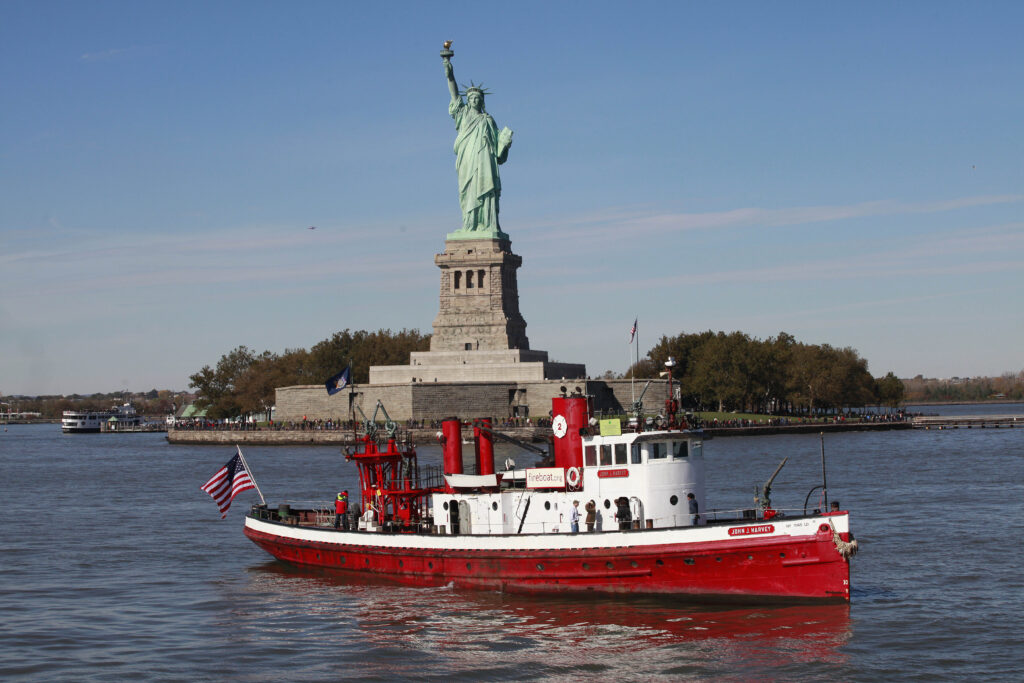
Among the other bright lights presented Tuesday is the linking of Brooklyn and Governors Island.
The Port Authority is committed, financially and otherwise, to the Brooklyn waterfront, to its piers and Brooklyn Bridge Park development and to Governors Island, according to Christopher Ward, executive director of the Port Authority of New York and New Jersey, and yesterdayâs keynote speaker.
âThe future of the Brooklyn waterfront is tied to and intrinsically linked to our ability to rebuild Governorâs Island,â he said âWe must look at Governorâs Island as a takeoff point.
âWe need integrated planning now. We need to be smart enough about the Brooklyn waterfront to ask what we want to keep and what we want to move out.â
Referring to the containerport in Red Hook, its proximity to the Cruise Ship Terminal and Governors Island and their needs for hotel rooms and services and potential ferries, he said the city needs to ask, âIs this where we want our last working containerport?â
Ward recommends that the containerport be moved south to 39th Street in Sunset Park in space where automobiles are shipped in and stored now.
âThe auto industry is also changing,â he said. âWe should move those cars out of there. We need to take back that space and move the containerport there.â
And keep the existing plans for waterfront access and a new park. âSunset Park deserves a park, too.â
Ward also noted that Red Hook is changing. IKEA is there now, a key employer, and Fairway has brought hundreds of jobs and quality food and stunning views of the water from its restaurant. He called the proposed residential development at 160 Imlay St. âa casualty,â however. It proved the area was not ready for luxury housing near industrial areas, like the containerport.
ââââââââ
© Brooklyn Daily Eagle 2009
All materials posted on BrooklynEagle.com are protected by United States copyright law.
Just a reminder, though -- Itâs not considered polite to paste the entire story on your blog. Most blogs post a summary or the first paragraph,( 40 words) then post a link to the rest of the story. That helps increase click-throughs for everyone, and minimizes copyright issues. So please keep posting, but not the entire article. arturc at att.net