By Ronald Thorpe
VP and Director of Education
Thirteen/WNET
As the anniversary month of the Apollo 11 moon landing is upon us, it’s a good time to remember what it took to achieve such an accomplishment and how much the country gained from it. It also should be a wake-up call for how far our country has slipped internationally in developing the human capacity that fueled that historic flight.
There is much talk among educators these days about STEM, an acronym for “science, technology, engineering, and math.” The United States has fallen seriously behind on a variety of measures connected with student achievement and interest in these areas, and this gap could pose a threat to our economic competitiveness — and more! — if we don’t do something about it. A year or so ago, a senior official in the Department of Homeland Security told me that he considered the situation so serious that it was now a threat to national security.
The last time we faced such a scenario was back in 1957 after the Russians launched Sputnik. The nation mobilized, but it also was galvanized by the fear of what could happen if we didn’t refocus our energy and resources. By the time President Kennedy gave his famous speech in 1961 announcing that the U.S. would put a man on the moon by the end of the decade, a large array of new and well-funded initiatives had been put in place to promote what we now would call STEM initiatives. They started with comprehensive investments in K-12 education and reached all the way to the creation of NASA. Many of the initiatives were so successful that we lived off the “capital” they created for decades.
That capital is now long spent, and with the general dis-investment in STEM areas over the last eight years, the nation finds itself in a difficult spot. The full extent of these decisions, especially as they relate to schools, is still mostly unknown. Students entering eighth grade this coming September mark the leading edge of a generation of children whose elementary school years took place during “No Child Left Behind.” The pressure to test students in math and English language arts in order to demonstrate student proficiency forced schools to short-change children in other subjects. The tests for science kept getting pushed aside while schools tried to get things right in the subject areas that were tested. I will not be surprised if the next outcry we hear from middle school and high school teachers will be that they don’t know what to do with large numbers of students who aren’t prepared for the most basic courses in biology, chemistry and physics, and whose knowledge of math is too rudimentary to get them into a track that will lead them to calculus. Ironically, these same students have been raised on technology, but their exposure to using technology in problem-solving or knowledge-gaining situations falls far below their abilities in gaming and social networking.
Of course, these gaps are the greatest among poor children, children of color, and those who don’t speak English as a first language.
Public television has never abandoned the STEM areas, even though traditional funders have pulled back their support. Many of programs are designed to engage children in seeing the world through the lens of science, technology, engineering and math. “Sid the Science Kid,” from the Jim Henson Company, began last fall and has become a major hit with children ages 3-6. For the last seven years “Cyberchase,” an animated series that focuses on STEM topics, has enjoyed a massive nationwide audience with 7-10 year olds spending an average of 60 minutes per visit to the web site where they are playing ... math games! “Design Squad” and “Fetch” appeal to the next higher age group, while our two iconic series, “Nature” and “Nova,” along with the more recent “Nova Science Now,” are enjoyed by older students, teachers, and a broad general public. Special offerings such as “Mysterious Human Heart,” the recent “Music Instinct” and the upcoming “Human Spark,” hosted by Alan Alda, provide a steady stream of new content.
As is always the case with public television, the value of these programs goes far beyond the broadcast. More and more, the programs are available for streaming and downloading off the internet, and the Education Department at Thirteen — along with others throughout public broadcasting — creates many materials to help teachers and students use these programs effectively in classrooms. A trip to www.thirteen.org and a simple click on the “education” tab will take any visitor into a world of possibilities along with the web sites connected to the programs themselves.
Oh, and did I mention that all of these resources are free? How’s that as an opportunity for schools facing tight budgets!
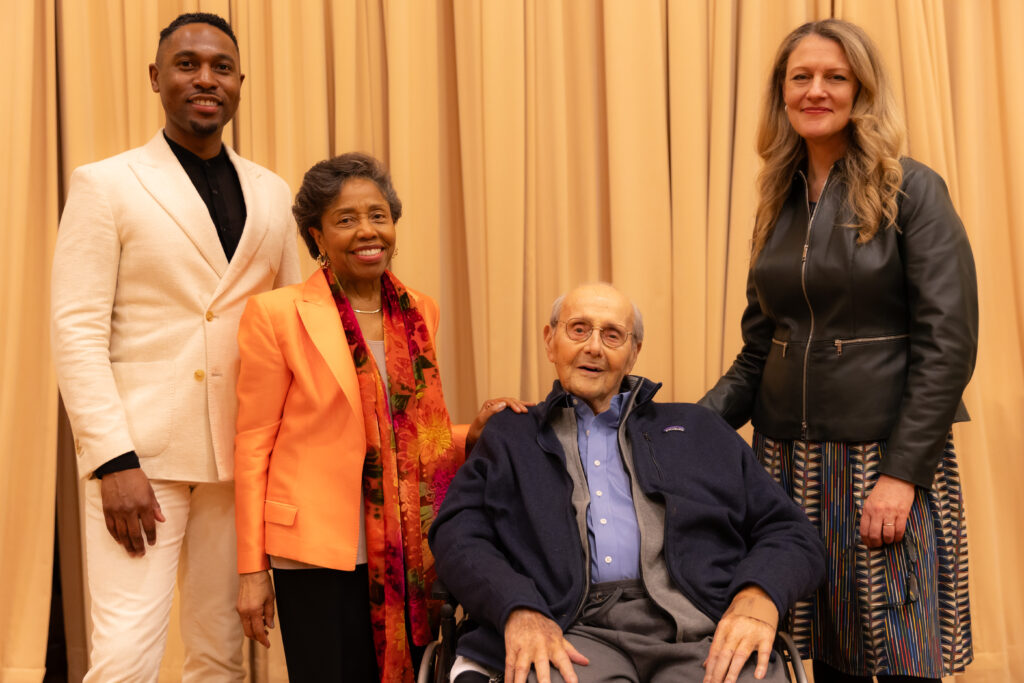
New York State is deeply concerned about how our students are doing in STEM areas. Recently Dr. Shirley Ann Jackson, distinguished scientist and president of Rensselaer Polytechnic Institute, convened a large group to begin charting what could become a blueprint for the New York State STEM Learning Network. I was pleased to be there representing Thirteen/WNET and the other eight public television stations in the State. Earlier in June the Carnegie Corporation of New York released its new commission report, “The Opportunity Equation,” addressing the same topic. Carnegie President Vartan Gregorian presided at the meeting in front of what was one of the most power-packed audiences I’ve seen in years, including U.S. Secretary of Education, Arne Duncan, and Chancellor of the New York State Board of Regents, Merryl Tisch. I came away from both meetings encouraged by the prospects. (You can find the Carnegie report at www.opportunityequation.org.)
Having been in education now for 35 years, however, I know enough to temper my enthusiasm for such promises. The Carnegie Report is not the first, but the newest in a rather long list. The RPI meeting also has many precursors. The promoters of these initiatives are sincere and committed, and they are definitely on the right track. But the nation has a way of putting such concerns on the shelf rather than into practice. We are much better at reacting to real or perceived threats to our well being than taking a proactive stance, especially during bad economic times when the temptation to hunker down and protect the status quo is great. In a world that is increasingly “flat,” the United States has lost much of what kept us easily ahead of other countries. If we are to remain strong, and if the core of the American Dream is to stay alive for our children, we need to get serious about what the Carnegie Report suggests and what Dr. Jackson is trying to mobilize. There’s no better place to start than here in New York, and public television is an eager partner in all such efforts.
Ronald Thorpe is Vice President and Director of Education at WNET.org, parent company of Thirteen/WNET, WLIW21, and Creative News Group, the public television stations for Metropolitan New York City and Long Island. He oversees a 25-person department dedicated to extending the value of public television’s resources beyond broadcast and especially into preK-12 education.
Among other initiatives, Dr. Thorpe is responsible for the annual Celebration of Teaching & Learning, a two-day professional development conference for more than 8,000 teachers and administrators. Write to Ron at thorpe@thirteen.org.
Questions? Comments?
Sound off to the Editor
————————
© Brooklyn Daily Eagle 2009
All materials posted on BrooklynEagle.com are protected by United States copyright law.
Just a reminder, though -- It’s not considered polite to paste the entire story on your blog. Most blogs post a summary or the first paragraph,( 40 words) then post a link to the rest of the story. That helps increase click-throughs for everyone, and minimizes copyright issues. So please keep posting, but not the entire article. arturc at att.net